
Manual Serialization & Aggregation Module
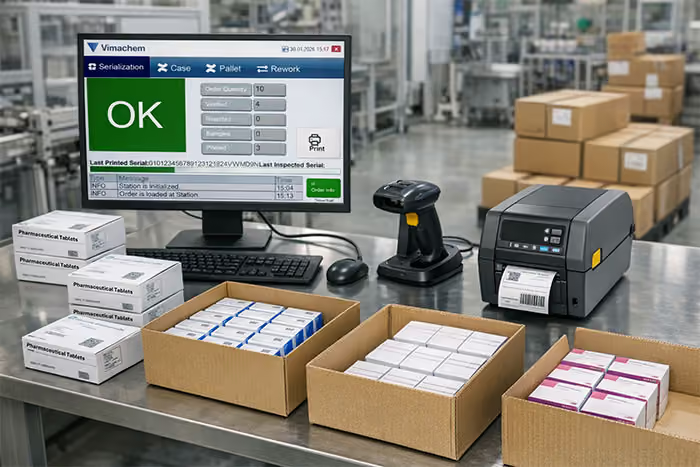
Add a compliant manual serialization and aggregation station to your Vimachem Level 3 SSM for low volume serialization, offline workflows, and post-batch rework. With a scanner, printer, and PC-based operator workstation, manufacturers can serialize and aggregate packaging levels and maintain full traceability across existing Level 2 and Level 4 connections.

// MES product tour
Take a self-guided MES tour now
130+
Pharma and biopharma customers
15 years
Dedicated to the Life Sciences industry
2 months
Faster deployment with the pre-validated package
5 / 5
Gartner Peer Insights, 100% would recommend
What is the Manual Serialization and Aggregation Module (MSAM)?
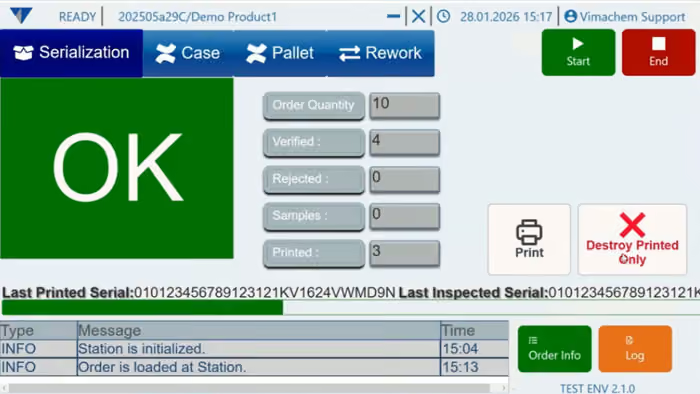
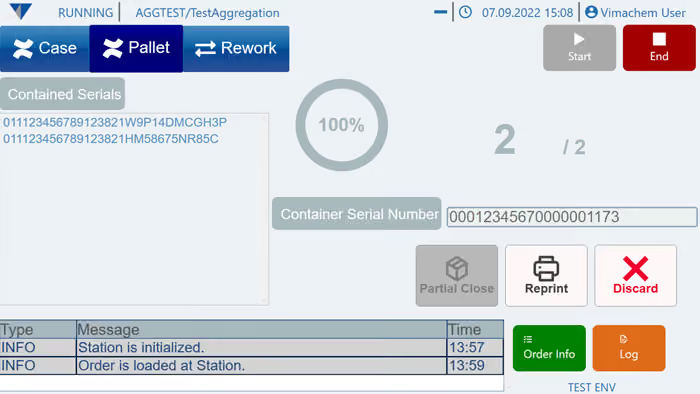
The Vimachem Manual Serialization and Aggregation Module (MSAM) is a modular, pharma-specific workstation solution for manual serialization, manual aggregation, and manual rework. Designed as an add-on to Vimachem's Level 3 Serialization Site Manager (SSM), it gives manufacturers a practical way to manage serialized products on manual or offline stations while preserving compliance, traceability, and integration with the wider serialization landscape.
As part of Vimachem's open serialization platform, this serialization and aggregation software integrates seamlessly with various IT systems and third-party equipment. It is the ideal solution to ensure regulatory compliance even for manual reworking and low-speed production.
MSAM use cases
Benefits of manual serialization and aggregation software
When serialized products need to be sampled, verified, reworked or returned, pharmaceutical companies need a controlled way to intervene without sending material back to the packaging line. Vimachem's Manual Serialization and Aggregation Module provides a compliant manual station for exception handling, helping manufacturers preserve traceability and respond faster to day-to-day warehouse or shopfloor issues. Connected to Vimachem Level 3 SSM, it allows these activities to be managed as part of the broader site serialization landscape rather than through disconnected manual workarounds.
For manufacturers serving emerging and cost-aware markets, flexibility matters as much as compliance. A manual serialization and aggregation station provides a practical route to market readiness without the high investment and complexity of adding a dedicated automated packaging line. This is especially relevant for markets such as Egypt and Algeria, where serialization and traceability continue to advance as part of the sector's broader digitization agenda. As an additional line within Vimachem Level 3 SSM, MSAM helps companies adapt to market-specific requirements with a more economical deployment model that still supports traceability and regulatory alignment.
MSAM gives manufacturers the flexibility to deploy exactly what the operation requires. It can be used as a serialization-only solution, an aggregation-only solution, or as a combined manual serialization and aggregation module for sites that need both capabilities in one station. That modular structure helps teams respond to different packaging setups and market requirements without overengineering the line. As part of Vimachem's modular serialization landscape, MSAM supports a practical rollout path: start with the functionality you need today and expand as requirements evolve.
FAQs on Pharma MES software
What manufacturers ask most often before moving from paper to a validated MES.
Pharmaceutical aggregation refers to the process of linking individual pharmaceutical products to higher packaging levels (such as bundles, cases, or pallets) for traceability and compliance. It’s a critical step in the pharmaceutical supply chain, ensuring that products can be tracked from the smallest package to the final shipment. This process helps prevent counterfeiting and supports regulatory compliance in the pharma aggregation process.
Pharmaceutical aggregation works by assigning unique identifiers to individual packaging levels and linking them together. Using aggregation software, this data is then consolidated into higher packaging levels, ensuring complete traceability across the entire supply chain. The system captures and stores information such as serial numbers, batch numbers, and expiration dates, making it easy to track the product's journey from manufacturing to distribution. For low-speed lines, manual aggregation can be used to aggregate up to three packaging levels efficiently.
While serialization refers to assigning a unique serial number to each individual product unit, aggregation involves linking these serialized units to higher levels of packaging. In other words, aggregation in pharmaceutical products groups serial numbers from individual units into higher-level packages (e.g., boxes or pallets). Both processes are essential in ensuring the traceability and authenticity of pharma aggregation, but serialization focuses on individual units, while aggregation ensures complete packaging traceability.